
TREES, PLEASE! The Case Of The Collapsing Canopy
By Tim Clancy, for Let’s Talk Plants! May 2026.


The Case of the Collapsing Canopy
California Polytechnic State University, San Luis Obispo, California is home to the Urban Forest Ecosystem Institute (UFEI). UFEI exists to research and share knowledge about urban forests. A few years ago, they devoted their efforts to a research project to determine the actual native range of the trees of California.
The project was funded by the Britton Fund, and its official title is “California’s native trees and their use in the urban forest.” And it can be found here, https://ufei.calpoly.edu/wp-content/uploads/2025/01/2023_Pawlak_Native-Trees.pdf
There are 95 species of trees native to California. The city of Encinitas is home to five native species, Pinus torreyana, Platanus racemosa, Salix gooddingii, Salix laevigata, and Salix lasiandra. Four of them are considered riparian and thrive when near water (not the ocean) and the other is our famous Torrey Pine. It is the only native upland species to Encinitas. As a matter of fact, from Oceanside to the border, there are only a total of 11 native tree species. About 1% of the city of Encinitas species list is considered native and around 5% of its total trees fall in the native category as defined by UFEI.
Oakcrest Park in Encinitas is one of the city’s oldest parks. It is a center of many family events, that is adjacent to the Boys and Girls Club, and walking paths connect it to the Encinitas Senior Center. There are bocce courts and horseshoe pits in a shaded woodland setting in the middle of the city.
About three years ago I noticed some dieback on a few of the mature Torrey pines. I was visiting a friend on a street a couple blocks from the park and you could see the browning patches in the crown. This can be seen in the photo from November 2023.

It turns out the Pitch Canker had finally made its way to Oakcrest park. The fungus was present in the Torrey Pine State Natural Preserve in 2021. So, it’s no surprise that it made its way to Encinitas not long after. A lab test confirmed everyone’s suspicions. The damage I saw was likely the result of an infection 12 months or more earlier.

Pitch canker is fatal in many cases and can be managed in others. As with many things in life, timing is critical. When I say it can be managed I mean sometimes the tree can withstand an attack. Once the canker has sufficiently stressed the tree it’s time for the real troublemakers to show up, the bark beetles. Once they get to work there is little that we can do. In the case of Oakcrest Park, some of the pine trees were injected with a pesticide to ward off beetles.
In the end, the battle was won by the allies and together the fungal disease and bark beetles finished off several trees. If you drive by soon, you can see the battle in real time as there are several specimens in various states of decline.
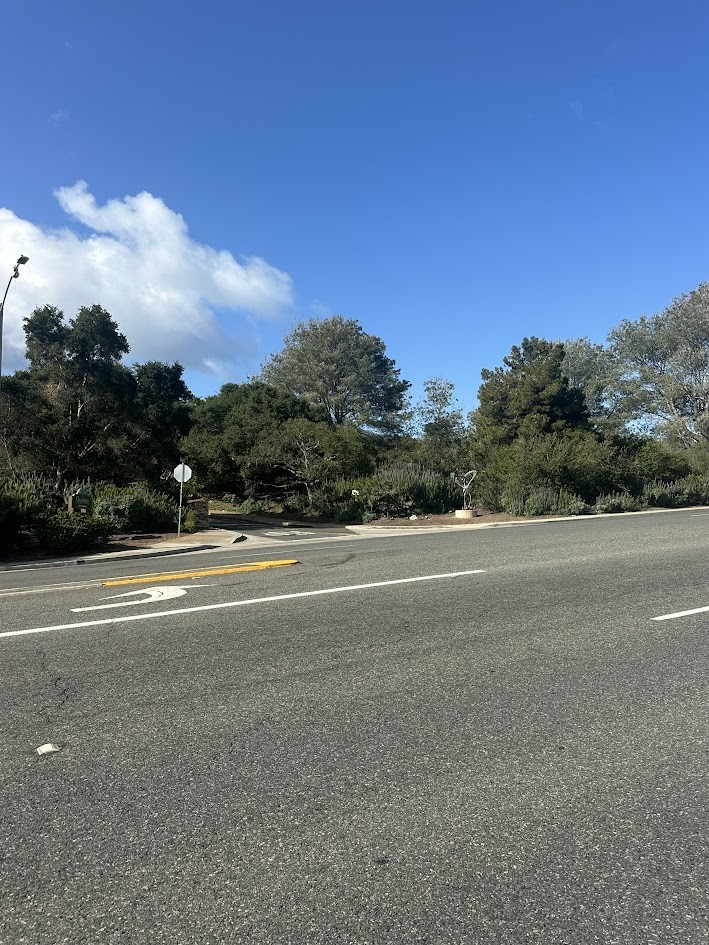
In Urban Forestry, one informal term we use is “Canopy Collapse.” Basically, when many mature trees in a park or even on city streets are lost in a short period of time and replacements are years away from maturity. This is what is happening at Oakcrest Park.
These are mature specimens and have been faithful residents of the park since I moved here 40 years ago. It’s sad to see them go.
And finally,...
UFEI has created a web page where you can see which species are native to where. That page can be accessed here, https://calpoly.maps.arcgis.com/apps/webappviewer/index.html?id=3c4233d842a64e41ac9cf3713848a481
P.S. Don’t forget that May 4th (also, Happy Birthday Mom!) is the annual tree stake removal day. May the Forest be with you.


