
TREES, PLEASE! Are Your Trees Climate Ready?
Updated: Mar 1
By Robin Y. Rivet, for Let’s Talk Plants! February 2026.

Are Your Trees Climate Ready?
Valentine’s Day is looming, but February 2nd is Groundhog Day. Although we have ample sunshine for groundhogs to see their shadow, where are all the woodchucks? Duh. There aren’t any marmots in San Diego (unless you count the one that hitch-hiked from NorCal in 2009). So how do “we” know that winter is done - if it never began? Across the state annual chill hours are declining and for San Diego County – it’s looking grim for stone fruit.
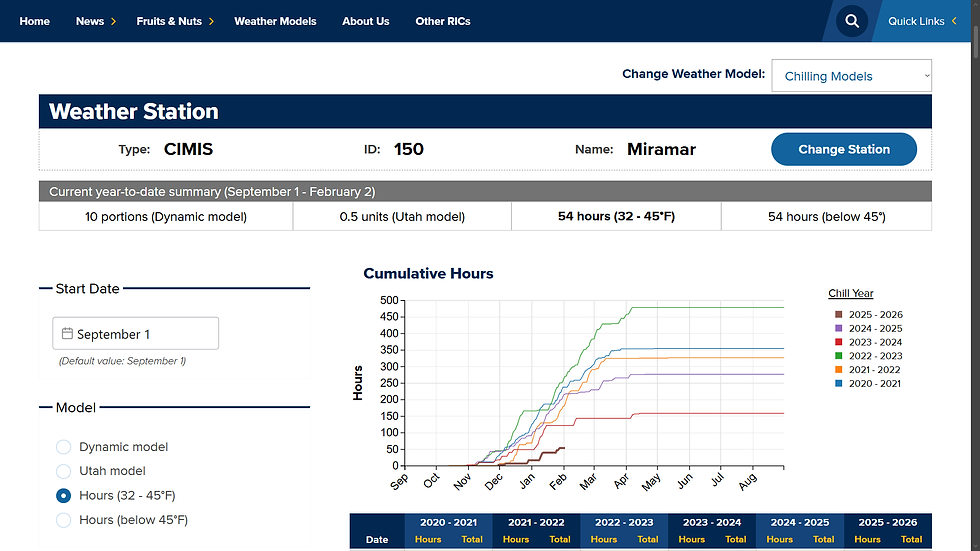
Twenty years ago, my weather station’s annoying alarm went off whenever the outdoor temperatures dropped into the 30’s. Those warnings were frequent and meant our sub-tropical trees might suffer frostbite. We’d get up and haul buckets of water (to act as heat sinks) around our home orchard. Our efforts largely prevented “freezer burn” to the growing fruit. My story is anecdotal, but CIMIS data available for the past six years shows a steady decline of chill hours for all six of our county’s weather stations – at least as of mid-January 2026. The Miramar location currently shows only 40 chill hours - which is less than a third of its lowest average for this time of year. Coastal San Diego recorded only seven total hours under 45 degrees.
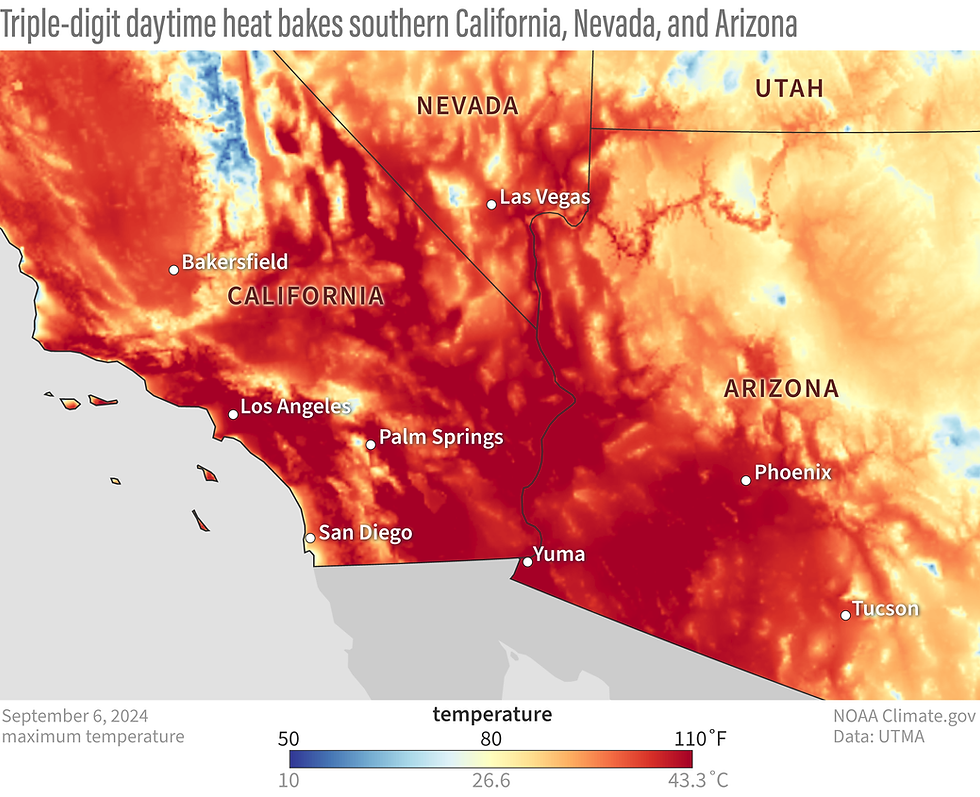
But wait, summers are also getting hotter. Our future predicts worse heat spells and droughts, less winter cold, unpredictable storm events causing winds, flooding and rising sea levels – all spelling trouble for long-lived trees. We’re also experiencing monsoonal rains, a potential death knell for natives fully acclimated to very dry summers. This doesn’t even calculate increased pollution, pest pressures and fire risks brought on by a rapidly fluctuating climate.

The least expensive and reliable method to plant trees is from bare-root specimens in February. You MUST beware of older chill-hour predictions, since procuring “low chill” trees used to mean buying species needing less than 500 chill hours. Today, unless you’re in a valley in inland north county or above 3,500 ft., you’re unlikely to achieve that much cold in any of our populated places. And, unless a groundhog turns up unexpectedly, my guess is most locales won’t get 150 chill hours this year. In fairness, there are species with very low cold weather expectations, but inspect tags carefully. The rules aren’t hard and fast, but what is clear are warming trends.

Other sub-tropical fruits like pomegranate, jujube, persimmon, guava, cherimoya, and dragon fruit are still good bets, as are many apples and pears, although late summer heat stresses pome fruits - which prefer cooler autumns to fully ripen.
Equally vital, we need to populate our urban spaces with more shade trees that should exhibit resilience over the next 75 years, since by 2100 our existing plant palettes may be in decline. Cal-Poly’s Dr. Matt Ritter has shared good choices for climate-ready tree species.
BEST MEDIUM TO LARGE-SIZED TREES FOR SOUTHERN CALIFORNIA’S CLIMATE FUTURE: https://selectree.calpoly.edu/list/67
SMALL CLIMATE ADAPTED TREES FOR SOUTHERN CALIFORNIA:
SMALL EUCALYPTUS FOR CALIFORNIA:
QUALITY TREES YOU'VE NEVER HEARD OF:
A San Diego 2050 climate report funded by the National Science Foundation was published by Climate Education Partners over a decade ago. Diverse local leaders, scientists and educators compiled this narrative offering a rare glimpse of bi-partisan consensus regarding looming regional climate changes. What to do? And what can happen if we ignore the writing on the wall? As of today, statewide actions have lost federal funding and traction, but everyone locally can play a role to enhance urban greening - despite discordant public policy.

