
SHARING SECRETS: What is growing that is good to eat in your yard?
by Cathy Tylka, for Let's Talk Plants! October 2026.

Question of the month –
What is growing that is good to eat in your yard?
Is this the first year, or is this something you have had for a long time?
Do you have a favorite recipe for this horticulture goodie?

Vincent Lazaneo reports…
This year I grew 'Tomatico' a new cherry tomato. It grew well, was very productive and produced lots of large, delicious, cherry tomatoes. Tomatico was an all-American selection winner in 2025, and it performed very well in the southwest region. Seed packets are still a bit expensive, but it is very disease resistant and well worth growing.

Kathy Voltin shares…
My tropicals are doing well including bananas, strawberry guavas, other guavas; also my lemons and Asian pears are great this year. My herb garden is overflowing with thyme, sage and chives. I have a Moujan tea bush that gives me an aromatic tea a few times a week.


Pat Pawlosksi of 92083 chats with us…
What is growing in my yard that is good to eat? It depends on if you are a butterfly--like Monarchs enjoying milkweed leaves, or the nectar. I could go on and on about that! But if it is a "people's choice", I would have to say avocados. Actually, though, when I first arrived here from Philly, I was sort of repulsed by avocados, in all sorts of ways. Later, I learned to appreciate them--but still not as much as I appreciate a good Philly cheesesteak. Anyway, the only reason I have a mature avocado tree (Hass, by the way) is that it was part of a grove that had been stumped to make way for houses. Heavy rains about ten years ago encouraged one of the stumps to resurrect itself, so I added a sprinkler and eventually was able to reap the benefits, eating-wise. But an avocado is still a far cry from a cheesesteak.
Deborah Surroz-Weber…
Says basil, and makes Caprese salad: Layer whole basil leaves with fresh mozzarella slices, ripe tomatoes, olive oil, and balsamic vinegar.

Deborah Young adds… Always marvel at the generosity of passion fruit vines!
Lorie Johansen, of 92084, adds this… Yes, I have been growing eggplant for the past decade.
My motto is JERF (Just eat real food)
I just got the AI answer I wanted when reviewing a spendy supplement called stemregen:
Yes, you can absolutely use real, whole food and targeted lifestyle interventions to support the exact same biological pathways that STEMREGEN targets.
Despite this toasty summer (it's 99 but feels like 108 degrees) my eggplants are very happy.

There is nothing better than grilled eggplant on the barbie. Simple recipe: Cut the eggplant into slices, salt the slices, and let it sit for one hour. Pat the slices with paper towels to absorb moisture. Toss with olive oil, balsamic vinegar, add pepper and cook on the grill. YUM!!!
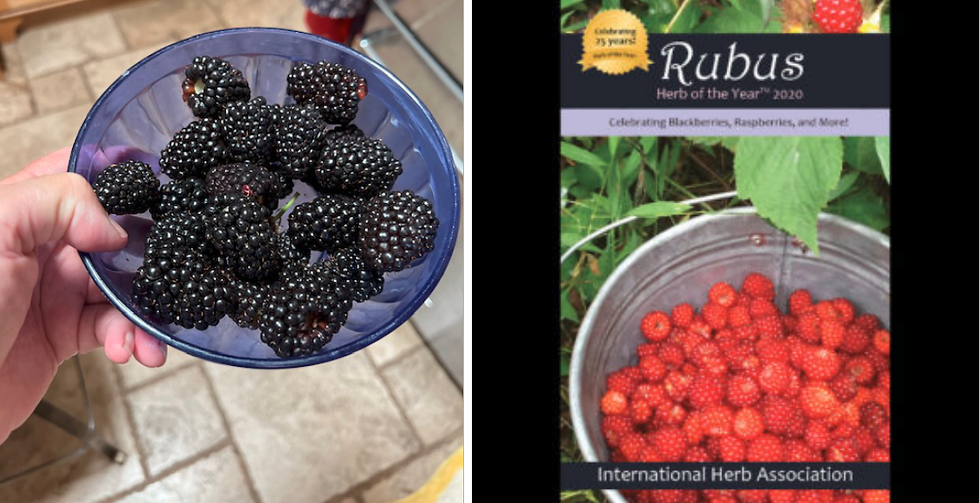
Karen England, 92084, has been sharing on social media about her recent harvests of blackberries and is also sharing about it here…
Did you know that Rubus spp., Blackberries, Raspberries and more, was/were the Herb of the Year™️ in 2020? Well guess when I planted my thornless blackberry bush? In 2019, in anticipation of its HOY designation. In only seven years I have become a bona fide blackberry farmer, and can now add that moniker to my being a persimmon maven. Much like the hands off, do nothing approach I have about caring for my persimmon tree which you have heard about for years, I employ the exact same method (if doing nothing is a method) to growing blackberries and not doing anything is paying off in spades. I don’t water, fertilize or prune other than whacking any rogue canes away from the path occasionally. The plant has settled in along my fence line and I just let it do its thing.
My blackberries are not only abundant this year but also huge! All summer long I have been getting a handful every few days but right now it’s bowlfuls! Besides eating them outright, I have been baking and cooking with them and have still had enough to freeze bags and bags for later when I will make blackberry pies.
Here is a favorite cocktail recipe from my chapter in the 2020 Herb of the Year™️ Rubus spp. book. (The whole book is available for purchase at IHERB.ORG)
Bramble – makes one cocktail

Ingredients:
9 fresh or frozen blackberries
2 or 3 fresh or dried sprigs of Sweet Lavender, Lavandula heterophylla (or English Lavender such as Hidcote or Munstead or French Lavender such Provence or Grosso)
Juice of half a Lemon (plus a strip of Lemon peel for garnish) (I use Pink Lemonade Lemons but Meyer Lemons or Eureka Lemons would be fine too)
½ oz Crème de Mure /Blackberry Liqueur (Homemade [see note] or store bought)
½ oz Lavender Honey Simple Syrup (recipe follows)
1 ½ oz Botanist Gin (“Botanist” is one of my favorite Gins but if you can’t find it, “Beefeater” or another London Style Dry Gin is often used for this recipe in bars)

Directions:
In a Rocks glass (also called an Old Fashioned, Whisky or a Lowball glass) muddle* six of the fresh or frozen berries called for, and even some of the lavender florets from fresh sprigs, in the fresh squeezed juice of half a lemon. Stir in the Liqueur, herbal honey Syrup and Gin. Top with crushed, cracked or shaved ice (I use an inexpensive Snow-cone machine that I got one summer on sale and it shaves the ice perfectly for cocktails such as Brambles and Mint Juleps.) Garnish with 3 whole berries skewered on a lavender sprig, and an optional lemon peel. Serve ice cold!
*A Muddler is a mixologist’s tool that is either a flat metal disc on the end
Lavender Honey Simple Syrup
Ingredients:
½ cup organic sugar
1 tablespoon fresh lavender florets or 1 teaspoon dried lavender
½ cup boiling water
1 tablespoon honey (Did you know Blackberry Flower Honey is available online! A great, albeit obvious, choice in this instance but not essential.)
Put the sugar and lavender in a heat proof jug such as a Pyrex measuring cup and pour in the boiling water. Stir to dissolve the sugar and cover with a plate or saucer and let cool, steeping the sugar water with the lavender like tea. When cool, strain and discard the lavender and stir in the honey.
I make this in small batches so it will be very fresh for making drinks and the Pyrex measuring cup makes pouring the syrup easy. If there is any syrup leftover it will keep in the refrigerator for a few days.
Note: The recipes for homemade berry Liqueurs, such as Crème de Mûre and Crème de Framboise, that I make, I found on the internet. Do a google search for recipes and find one that fits with your palate. I prefer making them much less sweet than what’s available commercially, and that has guided my recipe choices. If you like really sweet things and syrupy sweet liqueurs consider adding larger amounts of sugar than listed. One reason to make your own blackberry or raspberry liqueur, besides controlling how sweet the tipple is, is that you can make it organic!
Cathy Tylka of 92026 responds…
Guavas are wonderful and my crop is fab this year!
We know that Guavas are a low-calorie, high-nutrient fruit that can boost immunity, heart health, digestion, and skin vitality, while also aiding blood sugar control and weight management. They’re versatile in recipes — fresh, in juices, smoothies, jams, or desserts — making them a tasty and healthy addition to your diet.

Tony Gurnoe from 92007 concludes...
Food in the form of plants surrounds us more than many of us realize. My dad mused casually when I was a young kid that there have surely been many people who collapsed from starvation into a bed of edible plants (maybe that has something to do with me becoming a food plant obsessed botanist). Whether that be the plethora of plants that we call "weeds," for their sin of offering abundant, free nutrition. Some ubiquitous examples including dandelions (Taraxacum officinale), lamb's quarters (Chenopodium album), or purslane (Portulaca oleracea) which will each grow in challenging conditions that none of our more standard crop plants could ever tolerate.
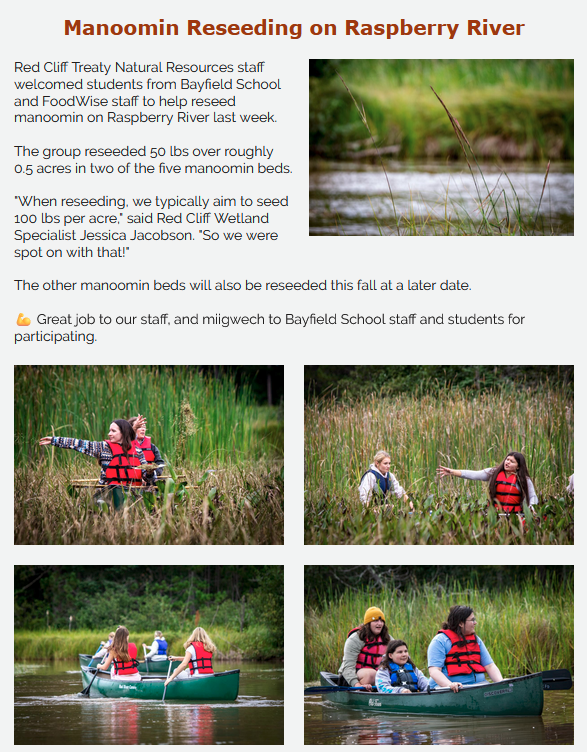
Or whether that be other forms of bountiful wild food for those who understand. We just concluded the Manoominike Giizis, which means the ricing moon, or the month during which we harvest wild rice, in the Ojibwe language. Wild rice has served as a generous and critical staple food for people in my tribe for hundreds of years but in the face of modern threats including climate change and industrial pollution, the historic wild rice marshes are increasingly dependent on a form of hands on restorative gardening. For people living in California, the best analogy to a staple carbohydrate like wild rice would be in our acorns. You might not consider it a "food plant," but if you have an oak of mature age they are probably full of the incredible packages of energy that we call acorns. Similar to Manoomin, the wild rice, oaks in California need the help of gardeners more than ever despite millions of years of evolution in exactly this place, because the world is changing and gardeners have a unique lens through which to both witness that change and to speak to its significance.
My garden is too small for all but the tiniest of oak species, and far too dry to grow wild rice, but I do have a 'Satsuma' tree which it turns out is food not only for my family but also for the lovely local swallowtail butterflies!

I am finally back in the garden after seemingly months of scorching weather. What I am doing now (sorting out survivors and casualties) propped me to think of this question for next month:
Has this summer's weather affected your plans for fall planting? How?
It's great to be back in the garden!

Cathy Tylka, RN, retired Emergency Nurse, found her love of plants and the SDHS merge many years ago. Cathy acted as Treasurer for the organization and volunteers for many activities. Now, she is more than happy to assist in gathering questions to ask you in the Sharing Secrets area of the Newsletter.

The funds garnered from this enterprise support our scholarships.
