
IN SEASON: Camellias - Queens Of The Winter Gardens
By Jason Chen, for Let’s Talk Plants! December 2025.

Camellias - Queens of the Winter Gardens

Being a professional plant nerd, I know I probably shouldn’t pick favorites since plants come and go like seasons. For people like me, favorite plants tend to fall in and out of favor and then circle back around again with little solid commitment. Fortunately for Camellias, they have always ranked in my top five (along with roses, waterlilies, orchids, and carnivorous plants). There’s just something about the deep rich green of the foliage, various leaf shapes, and the blooms that take centerstage often during the bleakest times of the year.
Camellias also have a special place here in Southern California especially as world renown Nuccio’s Nursery began their swan song last year. Unfortunately, their plans to close were hastened after being affected by the devastating Eaton wildfire in January 2025. After being in business for over 90 years in Altadena, their legacy and immeasurable contributions to the horticultural world will be sorely missed. Thank you, Tom and Jim, for all the knowledge, professionalism and the earnest sincerity you guys have passed down through the years.


A couple years ago, Dean Turney, the past president of the San Diego Camellia Society wrote a great piece for our newsletter on what I deem the “queens of the winter gardens” - Camellias. In it he listed a few of his favorites while generously giving us helpful tips on their care and how to get the best blooms and growth out of them. While Dean is unfortunately no longer with us, his expertise still holds true through the years. Please give his piece from January 2019 a read. GUEST COLUMNIST: Ten Must-Have Camellias for San Diego County
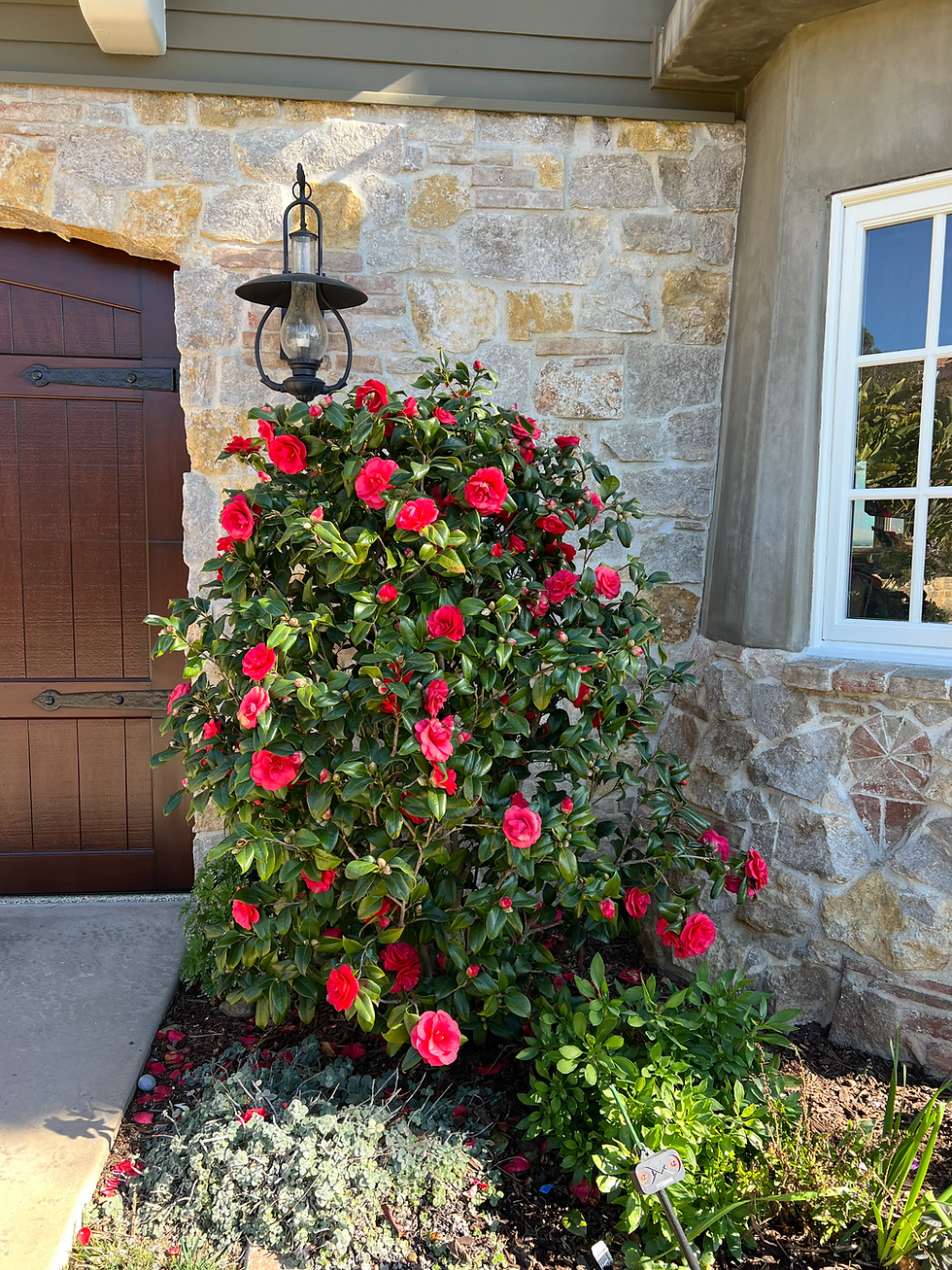
From a landscape point of view, there are many reasons why camellias have been consistently used in even the most basic of landscapes. Finding a shade loving, evergreen shrub that blooms during the dullest times of the year is a tall order to fill.
Surprisingly, they’re pretty forgiving when it comes to care and establishment…
Here are some key things to remember for plants in the ground:
Soil ~ Well drained, slightly acidic is what they prefer, but will grow and bloom in less-than-ideal conditions. hence you will often find them in older foundation plantings growing and blooming long after the homes have lost its youth. When planting, plant them 1-2” higher than the surrounding ground, the roots like to breath. Over time it will sink and settle. You don’t need to replace existing soil with new acid soil but breaking it up and mixing in a handful or two of compost will help give the plant a head start.
Mulch your plants with a good 2” layer of composted wood mulch, avoid piling against the trunk.
Water ~ They don’t like wet feet. Every 3-4 days in the summer to once a week in winter is generally all they need. When watering, keep it at the roots/mulch level, while making sure they get an adequate amount. Remember that inline drip systems need to run for longer to ensure enough water gets to the roots compared to sprinklers and emitter systems, or hand watering.
Fertilizing ~ Three feedings on holidays, St Patrick’s day, Memorial Day, and July 4th (or up until the middle of August) … If you can only remember to do one, make it Memorial Day or Easter. Keep in mind, Camellias bloom when they’re dormant, do not fertilize them when they are at the height of blooming. They will abort buds.
Here in the southwest you’ll often notice plants with yellowing foliage, most often that’s chlorosis. The plant is in need of iron (and other minor nutrients). Our hard/high mineral water ties up iron in the soil, making it less available the higher the pH/mineral content. Periodically sprinkling the soil with (soil) sulfur (especially before rains) and giving them chelated iron can help combat in this. That’s about it…

Favorites
For me what I’m drawn to is scent, foliage, color (I like reds and yellows), and flower form (the simple single and semi doubles, especially when they show the central boss of stamens), but as it is with personal taste, generally one is not better than another.
• Scent ~ ‘High Fragrance’ (bubblegum pink, powdery floral scent), ‘Minato-no-Akebono’ (single dark pink, spicy clove scent), Camellia grijsii (species, single white, allspice scent). While most japonicas are not fragrant, ‘Nioi-Fubuki’ (“scented snow storm”, semidouble white with occasional red flecks, clean bright floral scent), ‘Hermes’ (pink with white edge, soft and sweet) and ‘Kramers supreme’ (double-peony form, large red) are noted to have a light scent, especially on a warm day.
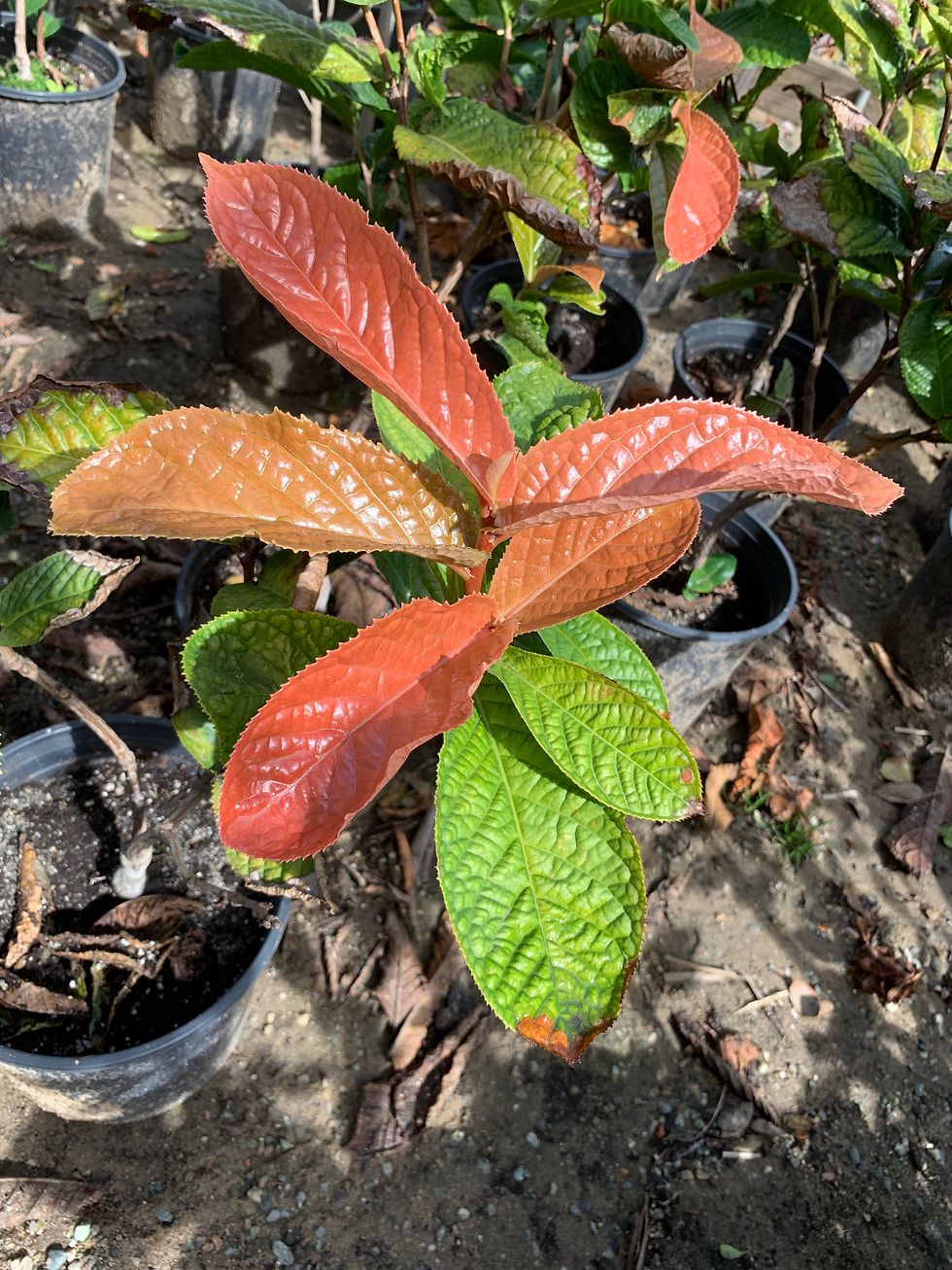
• Foliage and growth habit ~ ‘Holly Bright’ (deep green holly-like leaves, red flower), Unryu (contorted branching, coral pink tubed flowers), ‘Ginyo Tsubaki’ (silver grey serrated leaves, upright compact), ‘Kujaku tsubaki’ (cascading shrub, narrow long leaves with tubular long petaled red/white mottled flowers), Mermaid (fish tailed foliage, pink/white flowering forms), ‘Night rider’ (maroon with gold stamens, dark green with maroon new growth).


• Yellow ~ For the longest time, hybridizing a large yellow camellia was like a blue or black rose. 30 years later, while not quite sunflower yellow, we have a number of them available, mostly in a cream to butter yellow. ‘Senritsu-ko’, ‘Kino senritsu’, ‘Solstice’, ‘Kicho’, ‘Kinomoto 95’, species nitidissima, flava, chrysanthoides …


• Reticulata ~ have the largest blooms and carry their blooms on large open trees, they’re a bit harder to grow needing more space and dappled high light. ‘William Hertrich (Cherry Red), ‘Mouchang’ (salmon), ‘Mandalay Queen’ (pink), ‘Queen Bee’ (bubblegum pink), ‘Dr Clifford Parks’ (royal red), ‘Frank Houser variegated’ (magenta, virus splotched white), ‘Sheng Jie’ (white with pink tips).


• Hybrids ~ ‘Button’s and Bows’ (pink, compact), ‘Buttermint’ (small butter yellow blooms along the length of stem), ‘Bunny Ears’ (pink petals have a bunny eared fluting), ‘Taylor’s perfection’ (Pink flowers on open upright growth), ‘Yume’ (genetic variegation, petals alternate pink and white, low spreading growth).
• Sun ~ While camellias thrive in bright shade, most can take a few hours of morning sun, a few can even take full sun when adequately watered. ‘Star above Star’ (C. sasanqua hybrid with white blushed star shaped blooms, winter-spring), ‘Ace of Hearts’ (Ruby red open semidouble, spring flowering japonica), ‘Chansonette’ (lavender, double, low growing, fall), sasanqua hybrids are more sun hardy.
• Japonica ~ The quintessential winter and spring bloomer. Camellia japonica have the largest variation, from delicate venerable Japanese cultivars to dwarf teacup, grandma’s blousy blooms to bright clean modern shrubs capable of 3-4 months of floral show. ‘Ohkan’ (Higo white with red edge flared stamens), ‘Tancho’ (Higo white striped red, flared stamens), ‘Tata’ (white semi double gold stamens, dark green foliage), ‘Demi-Tasse’ (peach pink, hose-in-hose on a compact plant), ‘Firedance variegated’ (fire engine red with white virus variegation), ‘Henry E Huntington’ (giant pink), ‘Katie (large coral rose), ‘Jerry Donnan’ (ruffled blush pink formal double), ‘Nuccio’s Jewel’ (ruffled white pink edged peony double), ‘Ragland supreme’ (white formal double, will open along coast), ‘Princess Masako’ (Japanese red, white striped), ‘Prima Ballerina’ (semidouble blushed pink, upright growth), ‘San Dimas’ (scarlet red, gold stamens), ‘Tama glitters’ (semidouble, red with white bordered petals, open growth).


• Sasanqua ~ ‘Prima Ballerina', Hana Jiman (Single white, pink edge), Setsugekka (semi-double white), ‘Shishi Gashira’ (compact pink)
• Species ~ grijsii (white anise scented flowers), nitidissima (parent of many yellow hybrids)


(Editor's note: Speaking of blight and before moving on to the new frontier, in 2019, Susan Starr wrote about camellia blight in Let's Talk Plants! here THE UNDERSTORY: Blighted Camellias)
NEW FRONTIER! Summer flowering Camellias
True to form, humans are rarely satisfied with just leaving something as is, it’s not enough to have camellias for the fall, winter and spring. They ought to be flowering also in the summer!
The coral red Camellia azalea from subtropical southeastern China has become a hot plant for camellia hybridizers. Its claim to fame is its ability to bloom year-round with the bulk of them opening in July-September. Though hybridizers have found it a bit finicky to pollenate, a number of crosses have come out of China, US and Europe with the recent introductions of ‘Xiafeng Relang’ and ‘Camellia 1001 Summer Nights® Jasmine’ here in the US and the EU… The main drawback with these is they’re not very winter hardy, which luckily isn’t an issue for us here in San Diego. I have found them to be more prone to nutrient deficiency so get them grafted and fertilize on a more regular basis with cottonseed meal or other fertilizer for acid loving plants and iron.


I think have provided a somewhat shortlist of camellias for you to look into growing while proving it’s next to impossible to just pick a few favorites …
Good luck and happy gardening,
~Jason
