
GROW IN ABUNDANCE: Growing Eggplants in San Diego - A Beautiful and Bountiful Summer Crop
By Sommer Cartier, for Lets Talk Plants! August 2026

Growing Eggplants in San Diego - A Beautiful and Bountiful Summer Crop
If you've never grown eggplant before, this might be the year to give it a try.
Eggplants and San Diego are a perfect match. They love our long, warm summers and, once they get going, can produce fruit for months. If you've never grown one before, don't let them intimidate you. They're surprisingly easy to grow and have become one of my favorite summer crops.
Although we cook eggplant like a vegetable, it's actually a fruit. It belongs to the nightshade family (Solanaceae) alongside tomatoes, peppers, potatoes, and tomatillos. Like its relatives, eggplant loves heat, producing beautiful purple flowers before setting fruit. Plants typically grow 2 to 4 feet tall and are a beautiful addition to both vegetable gardens and edible landscapes.

Here's something that surprised me when I first started gardening: eggplants are actually tender perennials. Most of us pull them out at the end of summer; however, in much of San Diego they'll survive the winter if you leave them in the ground. I decided to experiment last year. Although my plant looked pretty tired through the cooler months, it bounced back with incredible vigor in spring and started producing fruit weeks before my newly planted eggplants. If you have the space, it's definitely worth trying.
Choosing the Right Variety
There are plenty of eggplant varieties to choose from, each with its own flavor, texture, and best use in the kitchen.
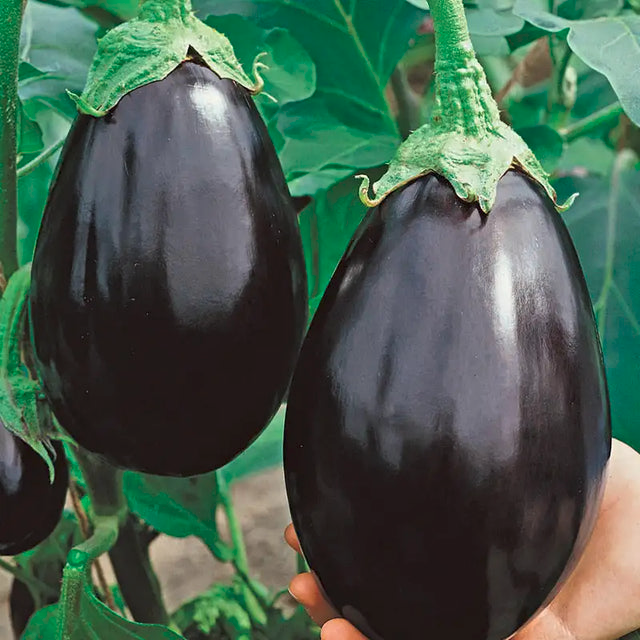
Black Beauty is the classic globe-shaped variety with a rich, meaty texture that's perfect for Eggplant Parmesan, ratatouille, and roasting. It takes a little longer to mature than other varieties, but the large, flavorful fruits are well worth the wait.
Japanese Eggplant varieties like Ichiban produce long, slender fruits with thin skin, few seeds, and a mild, creamy flavor that's excellent grilled, roasted, or added to stir-fries. They mature quickly and often provide one of the earliest harvests of the season.

Chinese Eggplant is even more delicate and works beautifully in curries, garlic sauces, and quick sautés.

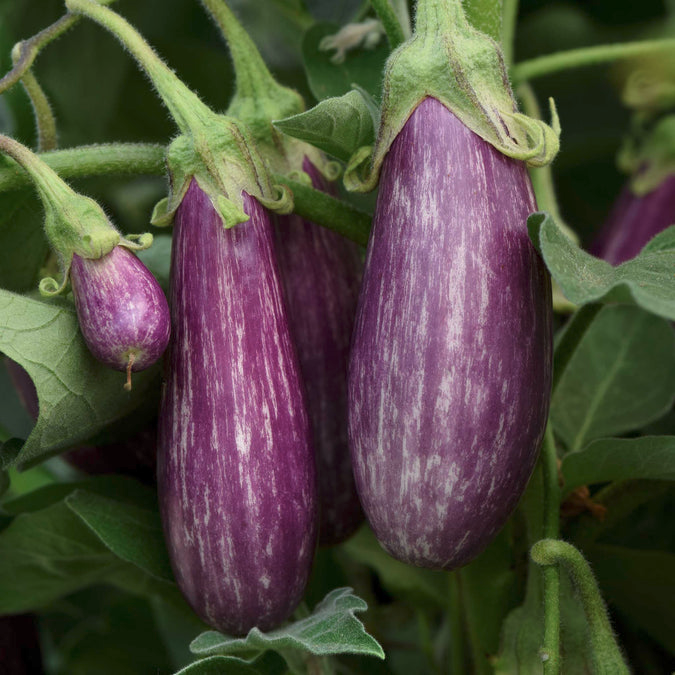
Fairy Tale Eggplant produces miniature striped fruits with tender skin and a naturally sweet flavor. The compact plants are highly productive and perfect for containers or smaller gardens.
Rosa Bianca is an Italian heirloom with creamy, nearly seedless flesh and very little bitterness. It's especially delicious roasted or featured in Mediterranean dishes.

Casper Eggplant is a white heirloom variety with creamy flesh, a mild, slightly mushroom like flavor, and very little bitterness. It's excellent roasted, grilled, sautéed, or blended into dips like baba ghanoush.

Growing Conditions
Eggplants thrive in full sun and need at least eight hours of direct sunlight each day to produce their best.
Plant them in rich, well-draining soil amended with compost. Eggplants are hungry plants, so don't skip fertilizing. Feed them about once a month with fertilizer that's higher in phosphorus and potassium and moderate in nitrogen. Too much nitrogen gives you a beautiful leafy plant but fewer flowers and fruit.
Space plants 18 to 24 inches apart to promote airflow. Larger varieties benefit from staking or caging to support heavy fruit. Eggplants also grow beautifully in containers. Just choose a pot that's at least 3 gallons and be prepared to water a little more often than plants growing in the ground.
Caring for Your Plants
Water deeply a couple times a week rather than watering lightly every day. Consistent moisture encourages healthy roots and helps prevent blossom-end rot. A 2 to 3 inch layer of mulch will help conserve moisture, regulate soil temperature, and keep weeds down.
If you'd like to overwinter your plant, simply leave it in place after your final harvest. Reduce watering during fall and winter, stop fertilizing, and remove only dead or damaged branches. Protect it from frost when needed. Once spring arrives, resume watering, fertilize, and lightly prune to encourage fresh growth.

Tips for Success
One of the biggest mistakes gardeners make is planting too early. Eggplants are sensitive to cold and should be planted only after nighttime temperatures consistently stay above 55°F.
Since they're part of the nightshade family, eggplants share many of the same pests and diseases as tomatoes, peppers, potatoes, and tomatillos. If possible, avoid planting them in the same location year after year. Rotating crops is one of the easiest ways to keep plants healthy.
Common Challenges
If your plants produce lots of flowers but little fruit, temperature is often the culprit. While eggplants love warmth, prolonged temperatures above 95°F can reduce pollination. Fortunately, production usually picks back up once temperatures moderate.
Spider mites are another common challenge during hot, dry weather. Watch for tiny yellow speckles and fine webbing beneath the leaves. Regularly rinsing the undersides of the foliage with water can help keep populations under control.
Blossom-end rot appears as a dark, sunken spot on the bottom of the fruit and is usually caused by inconsistent watering. Keeping the soil evenly moist is the best prevention.

Harvest & Enjoy
I'll admit it, I wasn't convinced I liked eggplant until I grew my own. That's when I discovered just how sweet, creamy, and flavorful they can be when harvested at the right time.
Harvest fruit while the skin is glossy, smooth, and firm. Here is an easy trick: gently press your thumb against the fruit. If it springs back, it's ready to pick. If the skin stays indented or has become dull instead of glossy, you've waited a little too long.
Use hand pruners to cut the stem rather than pulling the fruit from the plant. Harvesting often encourages continued flowering and keeps the fruit coming.
Whether grilled, roasted, baked, stir-fried, or blended into baba ghanoush, homegrown eggplants bring incredible flavor to the table.
If you've never grown eggplants before, I hope you'll give them a try. They're beautiful, productive, and one of the easiest warm season crops to grow in San Diego. There's nothing quite like harvesting one from your own garden and bringing it straight into the kitchen.

Sommer Cartier
Master of Arts, International Development and Social Change
Clark University