
GOING WILD WITH NATIVES: Needed - North County Native Gardens for the CNPS Native Garden Tour, Plus Some Rare Coastal Plants
By Susan Lewitt, for Let’s Talk Plants! November 2026.

Needed - North County Native Gardens for the CNPS Native Garden Tour, Plus Some Rare Coastal Plants
Would you like to help promote biodiversity and encourage the use of our wonderful native plants? The California Native Plant Society San Diego Chapter’s native garden tour will be April 10 and 11, 2027 and we are looking forward to including your garden in this special event. Mark these dates in your calendar and if your property is in the north area of San Diego County, and at least 60% native, please consider sharing your wonderful garden as part of the 2027 CNPS-SD Garden Tour!
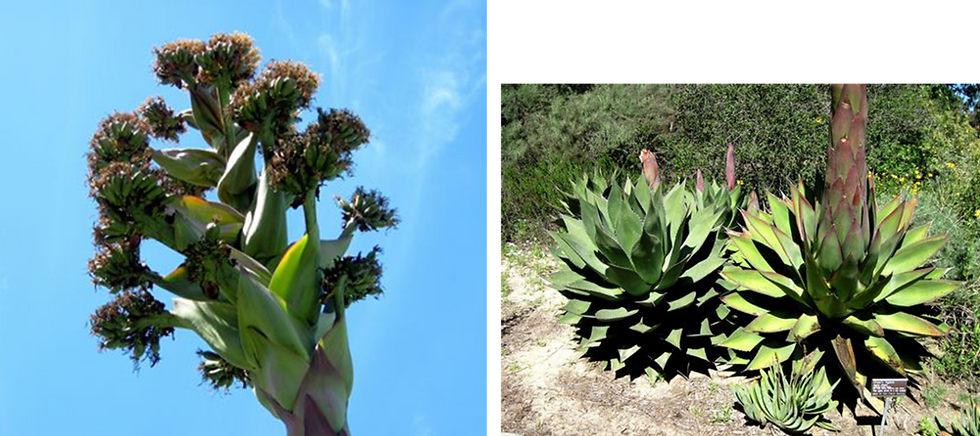
In the CNPS-SD Garden tour, there will be gardens that not only feature beautiful easy to grow native plants, but hopefully many of the rarer, and harder to find native species. This article highlights some of those rare species that are found by the coast. “These rare plants play a crucial role in the survival of butterflies, and moths including the white-lined sphinx, the California Giant Skipper, and the Brown Elfin. Unfortunately, due to extensive coastal development, these plants have become some of the rarest in the world. However, by cultivating these unique species, gardens can actively contribute to the preservation and protection of these plants” {“Rare Coastal Plant Pack”, CNPS-SD, 2024)

COASTAL AGAVE or SHAW’S AGAVE (Agave shawii) is found in Coastal Scrub, Maritime, and Desert plant communities. These areas may be rocky mesas, bluffs or slopes. Blooms of clustered yellow flowers on stalks up to 10 feet tall may be seen year-round. In your garden, put it in a location with full sun, and fast draining somewhat rocky soil with sparse organic matter. It should not be watered once established. If you prune this plant, which is seldom necessary, avoid getting the sap on your skin and watch out for the very sharp spines. Companion plants that work well near it include California Encelia (Encelia californica), Bushrue (Cneoridium dumosum), Chamise (Adenostoma fasciculatum var. fasciculatum), Cliff Spurge (Euphorbia misera), Box Thorn (Lycium sp.), San Diego Bursage (Ambrosia chenopodiifolia), Jojoba (Simmondsia chinensis), Sea Dahlia (Leptosyne maritima), and various Cacti. It supports birds and bats. This native Agave is available at many local native plant nurseries including Moosa Creek, Neel's, Native West, and Walker’s Wildlands.

SEA DAHLIA or BEACH COREOPSIS (Leptosyne maritima) an annual herb which is also considered a succulent, is found in coastal sage scrub plant communities on dunes and sea bluffs. The flowers usually occur in the spring, but may be seen toward the end of winter well into summer. It may attract and support birds, and bats. This plant does best in full sun with medium to fast draining soil, and very little water. They are a lovely yellow. This species may be found at Walker’s Wildlands, Neel’s Nursery, Native West, and Walter Andersen Nursery.

SAN CLEMENTE ISLAND BUSHMALLOW (Malacothamnus clementinus) occurs on the coast north of San Diego. Goats had been devouring this plant on San Clemente Island where it was endemic, and this plant was only seen in a very limited area. According to Calscape, “The goats have since been removed and the plant is recovering well, but many threats still remain, including competition with introduced species of plants, wildfire, erosion, and damage to the landscape by United States Navy bombing exercises.” Getting rid of the invasive goats allows this rare plant and other native species to recover. Keep an eye out for this rare plant with its soft pink to lavender and white flowers that are seen in the spring and summer on San Clemente Island and on the coast north of San Diego. Hopefully, San Diego area nurseries, especially those focusing on the rarer plants, will carry this and other hard to find beauties in the near future. Currently it is only available in Los Angeles area nurseries.

DEL MAR or COSTA BAJA MANZANITA (Arctostaphylos glandulosa ssp. crassifolia) is an evergreen shrub that grows at a moderate, rate spreading out about 6 feet wide and up to 8 feet high. It is found on the coast from San Diego to Los Angeles, occurring in Chaparral Plant Communities. Its cream and pink flowers may be enjoyed in the winter and spring, and have a slight fragrance. The flowers are followed by berries that are eaten by coyotes, bears, and ground animals. People without food allergies, it may eat these berries in moderation. This link tells more: https://www.superfoodevolution.com/wild-manzanita-berries.html It supports many other native wildlife species including bees, moths, hoverflies, and hummingbirds.

This Manzanita may be grown in partial shade to full sun with medium to fast draining soil. It does best in eroded sandstone, a soil type common to San Diego County’s coast. After it is established, it will need summer watering no more than twice a month. It may be pruned lightly including removal of dead branches, if desired. Summer Holly (Comarostaphylis diversifolia ssp. diversifolia), Mission Manzanita (Xylococcus bicolor), Nutall's Scrub Oak (Quercus dumosa), California Encelia (Encelia californica), Chamise (Adenostoma fasciculatum), Coastal Pricklypear (Opuntia littoralis), Mojave Yucca (Yucca schidigera), and Tree Poppy (Dendromecon rigida) all make great companions for Coastal Manzanita. You may find this Manzanita at Las Pilitas Nursery and Neel’s Nursery. Seeds for this species may be ordered from the CNPS-SD Seed and Bulb website. The link for this plant is: https://www.canativeseeds.com/product/arctostaphylos-glandulosa-ssp-crassifolia-del-mar-manzanita-/1008?cp=true&sa=true&sbp=false&q=false

GOLDEN CEREUS (Bergerocactus emoryi), a native cactus species, may get to 3 feet tall and is considered a shrub, as well as a succulent. It works well in containers and should be situated in partial shade with fast draining soil, and very low to extremely low watering. Its attractive yellow flowers may be seen in the spring. It is not confirmed, but thought that this species supports native birds, bats, bees, and butterflies. This cactus species has been available at Moosa Creek and Native West.

SANTA CRUZ ISLAND IRONWOOD (Lyonothamnus floribundus ssp. aspleniifolius) is an evergreen tree quickly reaching a height of about 50 feet by as much as 24 feet wide. Its cream and white flowers occur in the spring and summer. In natural areas, it occurs in Chaparral, and Broadleafed Upland Forest Plant Communities. As its name suggests it may be found on Santa Cruz Island, as well as, San Clemente Island. Look for it on rocky slopes and in protected canyons. It supports several native bees, possibly including the Hylaeus polifolii and the Pinocchio Mason Bee (Protosmia ribifloris), Other animals that may rely on this plant include moths, bats, caterpillars, and birds.

In your landscaping, the easy to grow Santa Cruz Ironwood will enjoy full sun, in a variety of soils that have medium to fast drainage. Once it is established it will only need a once-a-month summer watering, Other Island species make great companions for this tree such as Catalina Island Manzanita (Arctostaphylos catalinae), Santa Cruz Island Buckwheat (Eriogonum arborescens), St. Catherine’s Lace (Eriogonum giganteum), Redflower Bucksheat (Eriogonum grande var. rubescens), Tree Poppy (Dendromecon harfordii), Giant Coreopsis (Leptosyne gigantea), Catalina Cherry (Prunus ilicifolia ssp. lyonii), Island Hazardia (Hazardia cana) and Island Bristleweed (Hazardia detonsa). Santa Cruz Ironwood is available at several nurseries including La Pilitas, Native West, Neel’s Nursery, Plant Depot, and Walter Andersen, as well as Devil Mountain Wholesale Nursery in Carmel Valley, Oceanside, San Juan Capistrano, and Vista.

The best place for these rare natives is in the natural areas where they are part of the biodiversity that supports our health and our communities. With more development and fragmentation, the areas where they may occur become smaller and less than ideal. To prevent these plants from becoming endangered, or going extinct, the next best place is in your garden. For more information on these, and other native plants, please visit Calscape. Check with the nursery you intend to visit for plant selection, hours and to see if an appointment is needed. Also, please consider having your native garden in the CNPS-SD native garden tour, April 10 and 11, 2027! And remember, never remove a native plant from the wild unless you have a permit to do so.
