
BOTANICAL ENCOUNTERS: The Atacama Desert Superbloom of 2011
Words and pictures by Ida K. Rigby, for Let’s Talk Plants! June 2026.

The Atacama Desert Superbloom of 2011
This month’s column illustrates the adage: “A Picture is Worth a Thousand Words”. What can we say in the face of the exuberance of nature? The flora of the Atacama was glorying in a 40 year bloom. The rains had come.
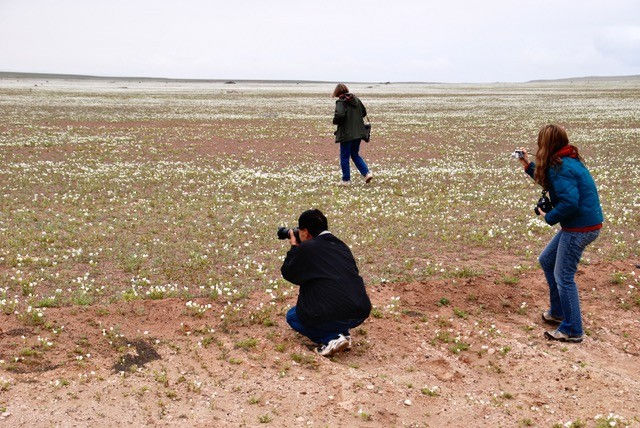
We often found ourselves in quite forbidding landscapes.


Someone had written in on the road sign “MALO CAMINO MA “, advising against making a left and taking a bad road to Copiapo. After lunch we were headed somewhere in this seemingly desolate vastness; we knew from what we had already seen that our leader, Kathy Musial of the Huntington, knew where to find the treasures; no one mutinied, and we traveled on. We were still within the eternal fog belt when we came upon a promising field
of small, white nolana’s (Nolana boccata).

At our next stop out of the sand popped yellow Rhodophiala bagnoldii lilies mixed with snowflake like Schizopetalon maritimum.


Our next stop was dense with Rhodophiala bagnoldii lilies, Solanum heterantherum and the deep green short spires of Heliotropium sinuatum topped with fragrant white flowers.


We marveled at the range of blues in the Zephyra elegans.


Sand and stone created terraces of Zephra elegans, ethereal species Cristaria and Encelia canescens.


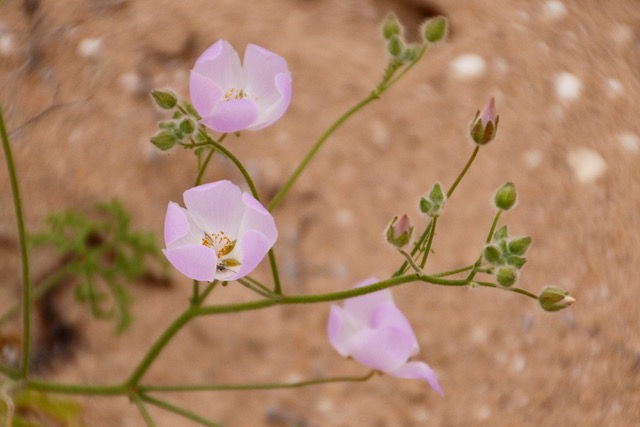
Soon, as we often found, we had feasted our eyes on and fervently photographed our first sighting of a few specimens of a species only to find later a profusion of that same plant.


Centaurea chilensis, in various colors ranging from white to lavenders filled in some empty spaces between rocks.

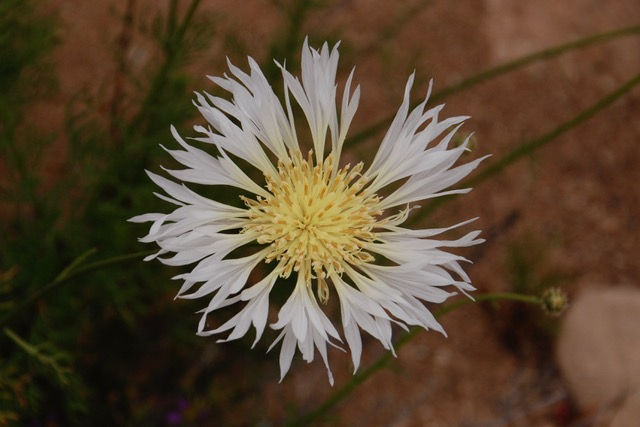

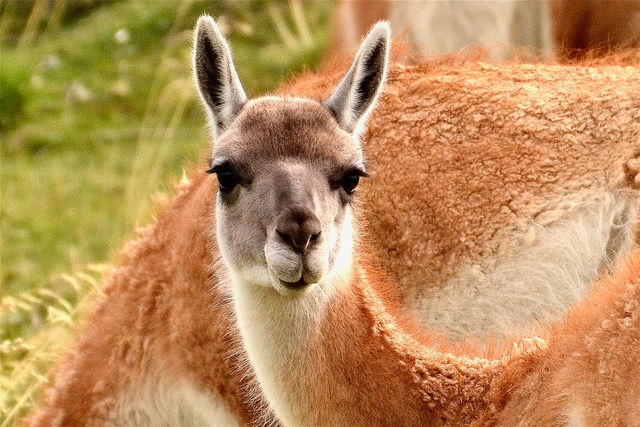
As we headed for higher ground we had our only mammal sighting, a guanaco at a great distance racing across a small valley.

To do the lovely guanaco justice, here are a few photos taken in Chile’s Torres del Paine National Park another year.



When we reached some low hills, we hiked up rocky washes without fear of poisonous snakes. None exist there. Imagine freely clambering up rocky slopes in Anza-Borrego, grabbing rocky handholds at random without having to see where you put your hand or blithely wandering without considering where your ankle passes a boulder!


We stopped to photograph yellow Balbisia peduncularis and the magenta blossoms of Mirabilis elegans.


The cacti are a species of Eulychnia. After a short drive we stopped to admire a field of Eulychnia brevifolia with their beautiful spines set off by backlighting.
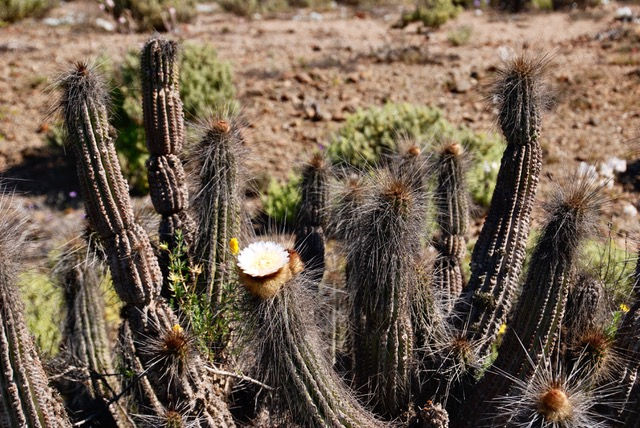

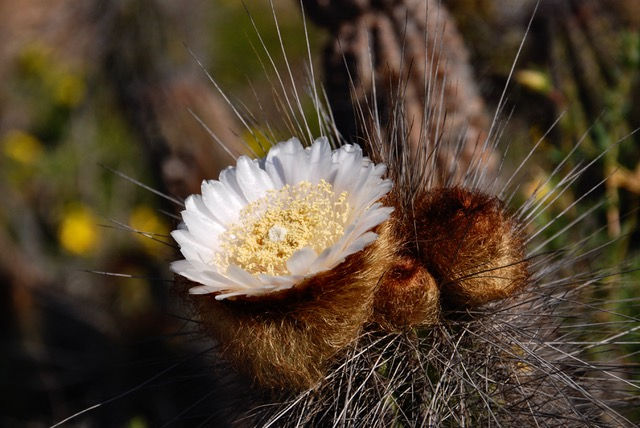

Our mid-day stop was at a field of blue nolana presided over by a massive eulychnia.

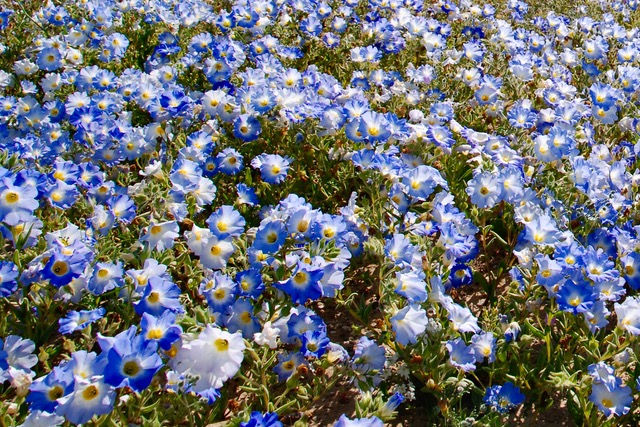
The overwhelming sight induced a contemplative Zen state or a heady euphoria, depending on one’s inclination. Overcome by the spectacle, some of us raced through the field; others fell to their knees.
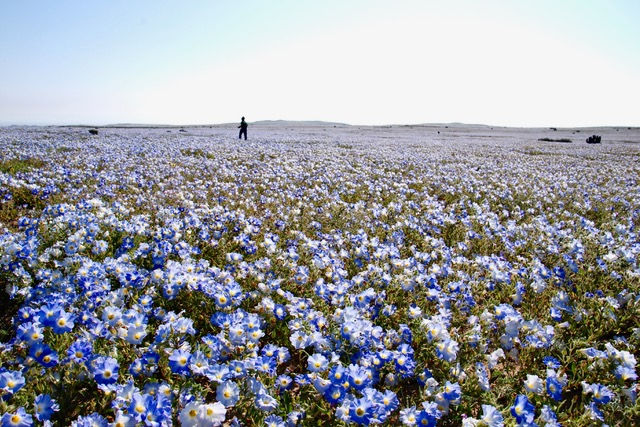


I wanted to lie down among the flowers and just be left there. We had experienced the Sublime, that which late l8th century European philosophers and artists tried to describe or capture. Ultimately I came to my senses and knew that this phenomenon was ephemeral, that I might have to lie in that field another forty years before it returned to this state; so I returned to the van knowing that even more of Nature’s celebrations awaited us that afternoon and the next day.

Ida Rigby is a past SDHS Board member and Garden Tour Coordinator. She has gardened in Poway since l992 and
emphasizes plants from the northern and southern Mediterranean latitudes. Her garden received the San Diego Home/Garden magazine Best Homeowner Design and Grand Prize in their Garden of the Year contest in l998. Her travels focus on natural history.
